As an Amazon Associate I earn from qualifying purchases.
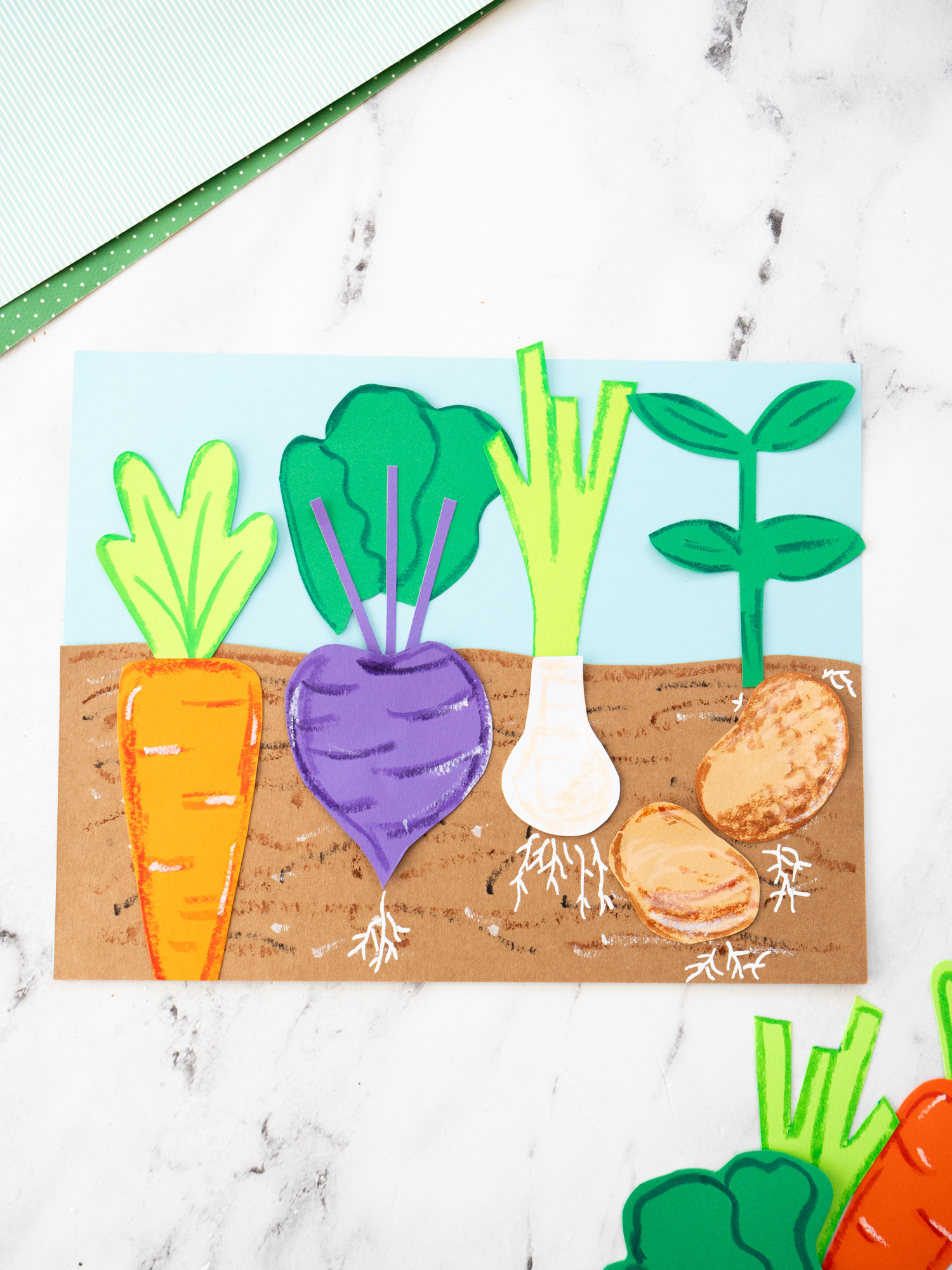
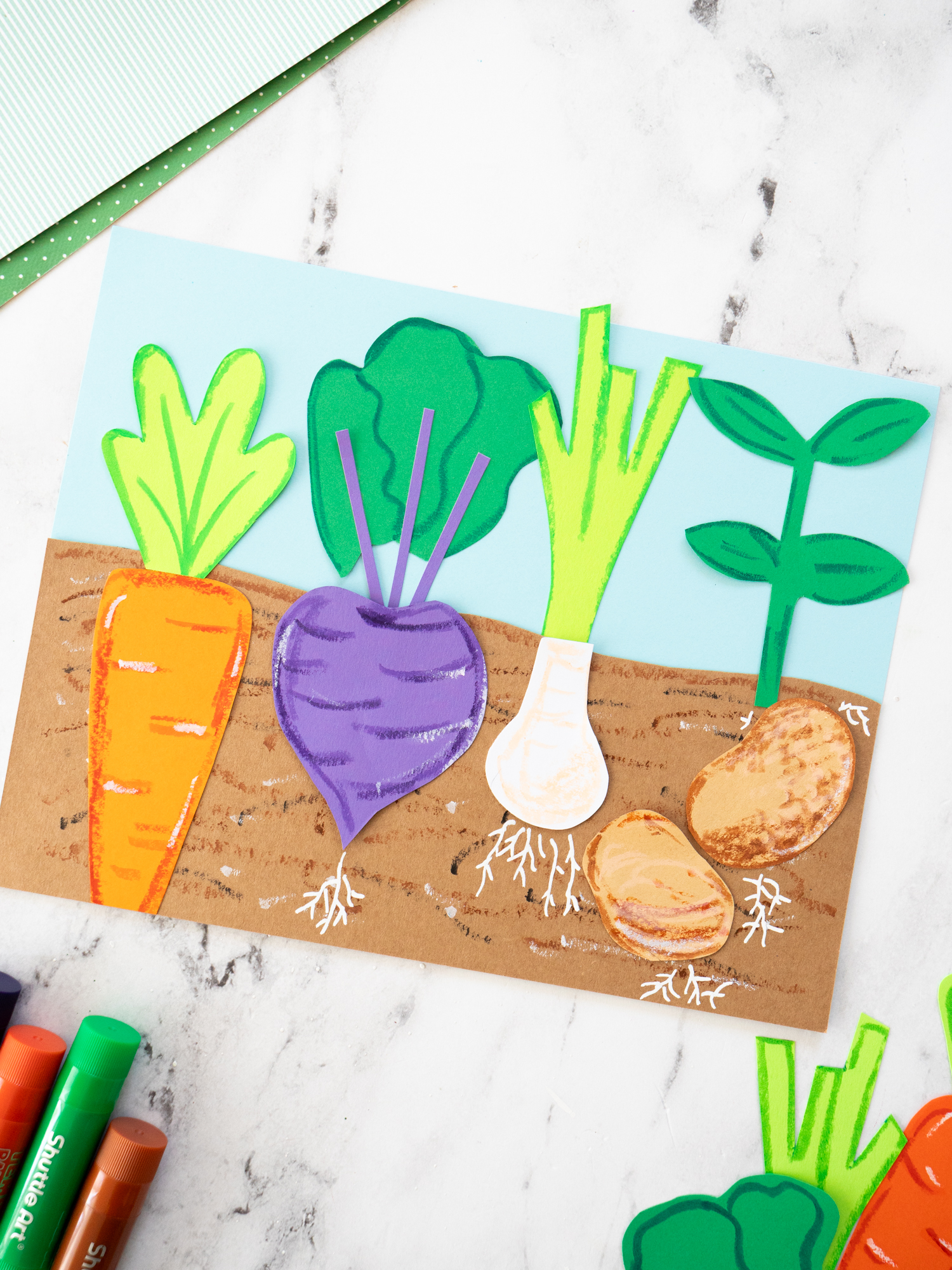
Try this vegetable garden craft for kids using a free template. A simple, creative way to explore how vegetables grow underground!
Vegetable Garden Art Craft
This vegetable garden craft for kids is the perfect hands-on activity that kids will love. Kids will enjoy building their own colorful garden while learning how veggies grow right beneath the soil. It’s a fun, creative kids gardening activity that brings art and nature together!
This vegetable garden craft for kids is great for older elementary ages, giving them the chance to practice those fine motor skills while also getting to create with a fun craft medium—tempera paint sticks! Tempera paint sticks are a great way to add texture and rich color to projects without the mess of traditional paint. Kids can easily layer colors, add details, and create a soil-like texture for their garden, making this a simple and engaging garden art for kids project.
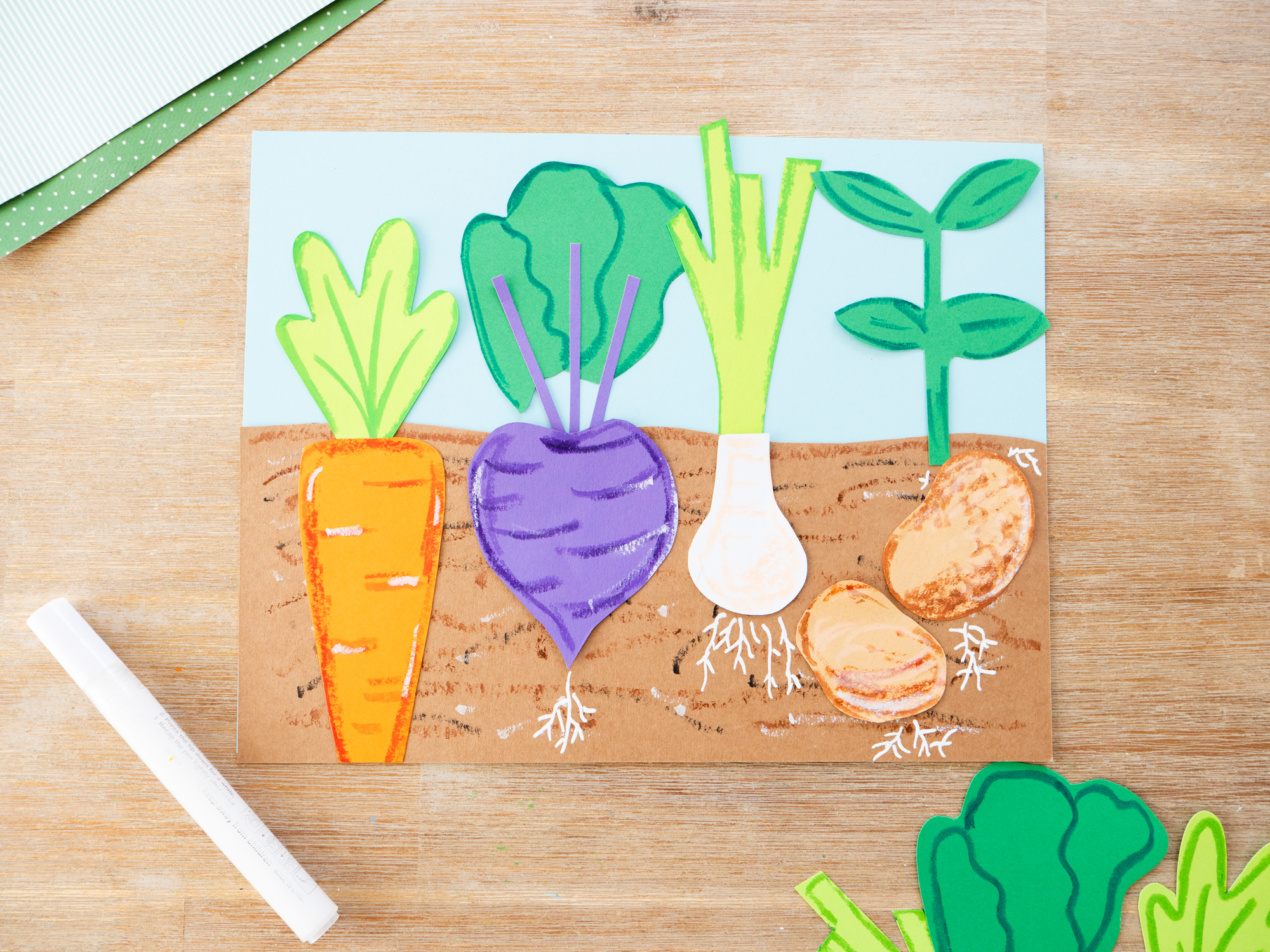
From carrots and beets to potatoes and green onions, kids will design their own garden scene by placing each vegetable underground with leafy greens popping up above. It’s such a fun way to bring art and nature together!
Supplies You’ll Need:
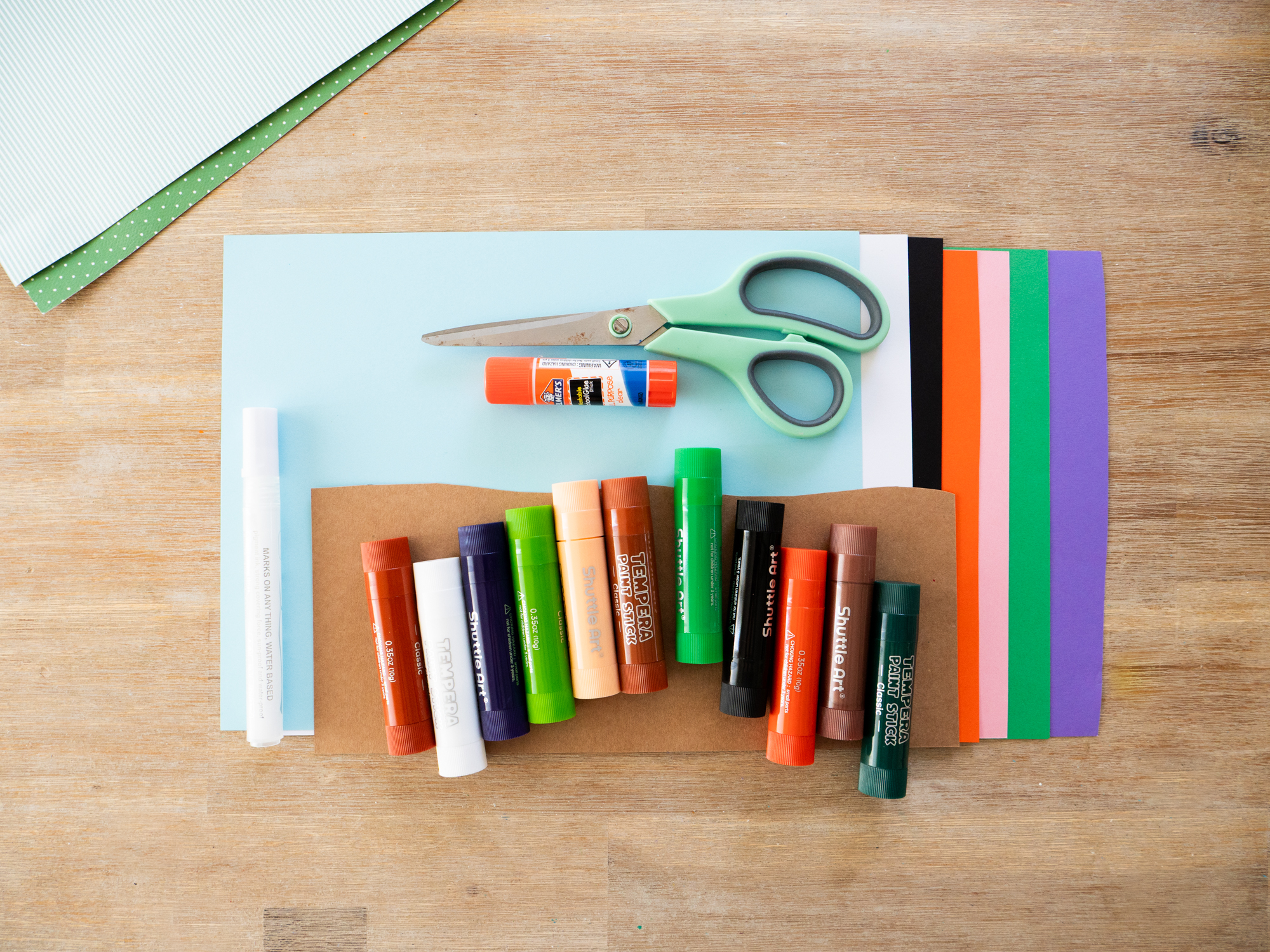
- Colored cardstock (blue, brown, vegetable colors)
- Vegetable template (free printable!)
- Scissors
- Glue
- Tempera paint sticks – we love this Shuttle Art brand! or this Kwik Stix Brand **
- White paint pen (optional)
** If tempera paint sticks are not an available option, you can add the texture lines with colored pencils, markers or crayons as well.
Vegetable Template
To make this vegetable craft template even easier to use, we offer a free printable with all the pieces—carrot, beet, potatoes, and more! It’s perfect for a quick, no-prep plant craft for elementary students. Kids can also design their own vegetables for a more creative approach. Grab the free vegetable template here!
How to Make this Vegetable Craft
Step One: Create your Garden Base
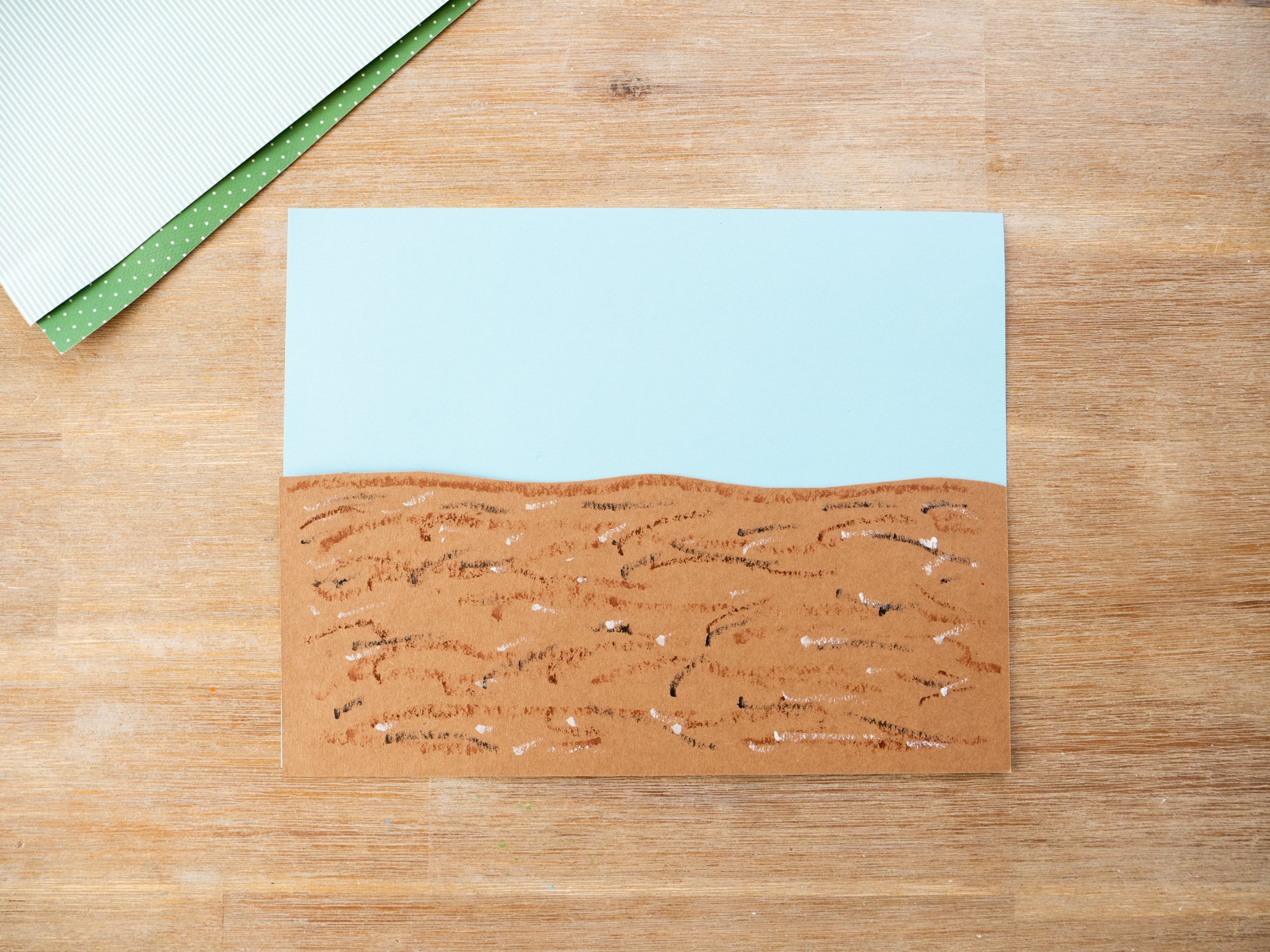
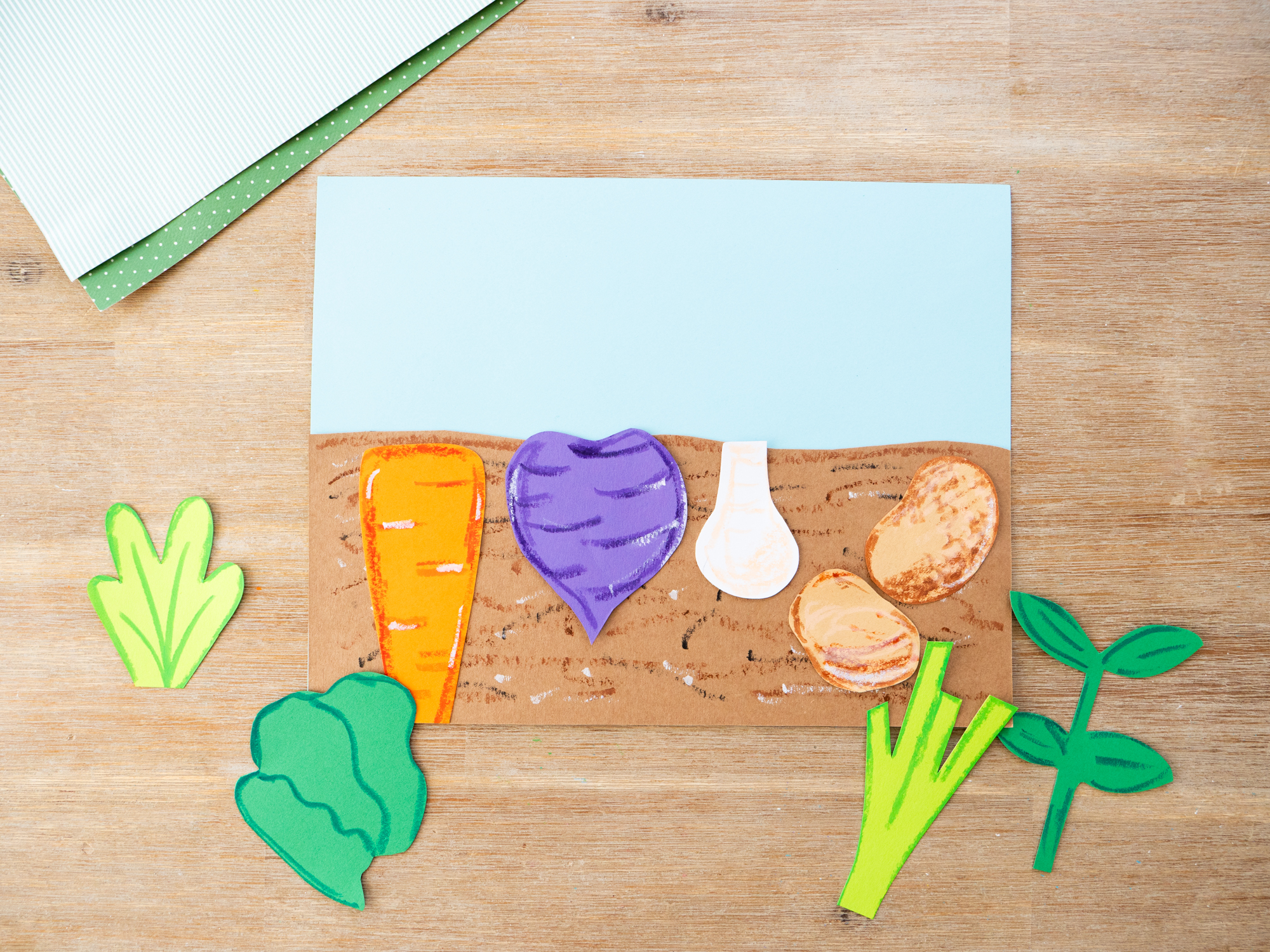
- Tear or cut a piece of brown paper and glue it to the bottom of your vegetable garden.
- Add soil texture with paint sticks. We used black and white and just lightly added lines to the base.
Step Two: Cut Out Your Vegetables
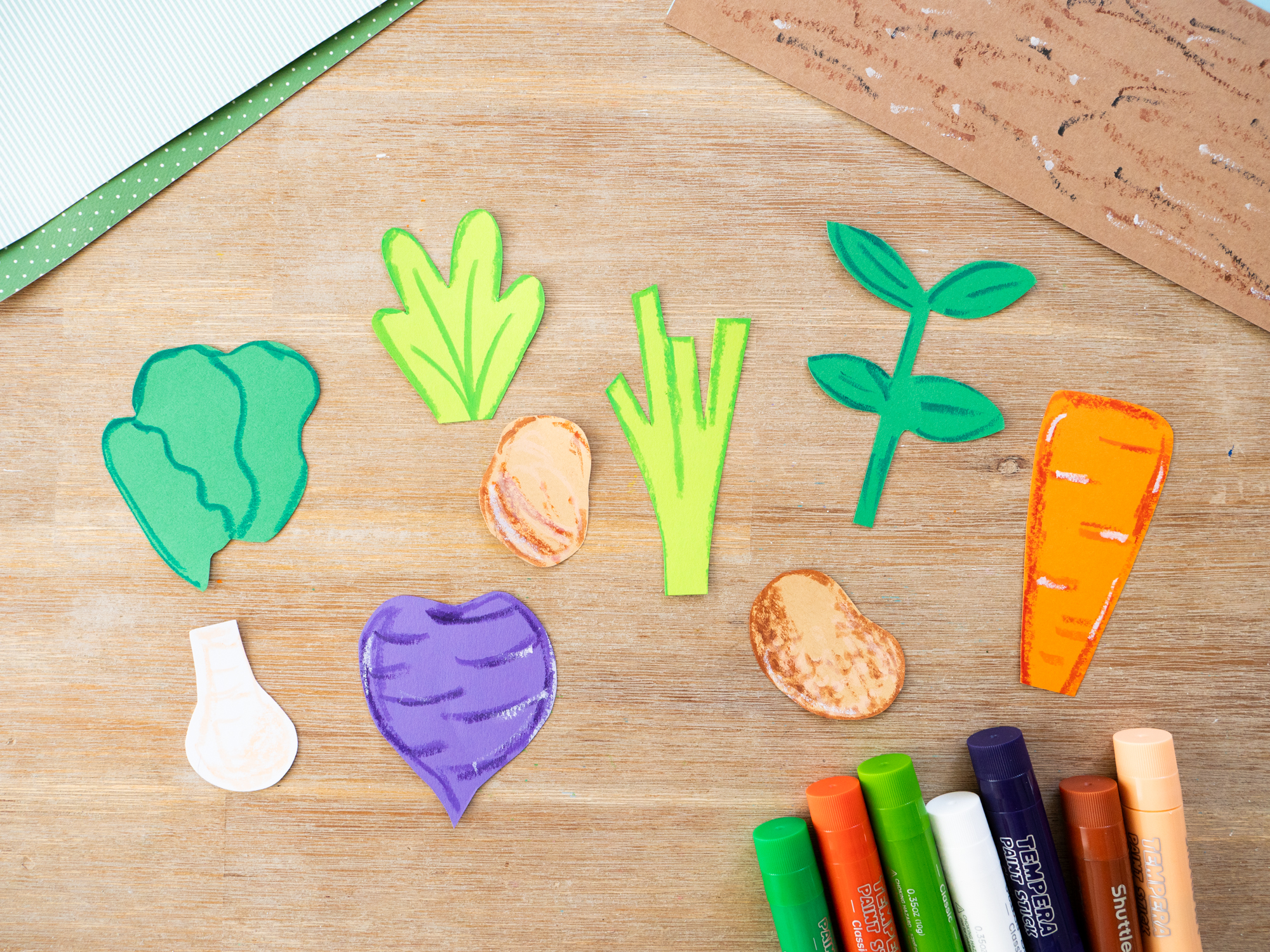
- Using our free veggie template, cut out your various veggie bases and their matching leafy greens.
Step Three: Add Details with Paint Sticks
- Use your tempera paint sticks to build texture, add lines, and explore simple shading techniques. This is a great opportunity to slow down and really observe vegetables (either from real life or reference photos) and try to recreate their unique textures and details in your artwork. Encourage kids to notice things like lines on a carrot, the smoothness of a potato, or the layers of a beet, and bring those details into their design.
Step Four: Build your Garden Scene
- Glue your veggies in the ground
- Glue your Greens above the soil.
Step Five:
- Using a paint marker, add root details to the bottom of your veggies.
Crafty Tips:
- Use thicker paper or cardstock for your vegetables so they don’t bend or wrinkle when adding paint stick details.
- Encourage “sticker cutting” by leaving a small white border around each piece. This helps younger kids cut more confidently and keeps shapes looking neat.
- Layer the paint sticks lightly to build texture instead of pressing too hard right away. This gives a more realistic “soil” and vegetable look.
- Let pieces dry for a minute before gluing if kids are using a lot of paint stick—this helps everything stick better.
- Offer creative freedom! Kids don’t have to stick to realistic colors—purple carrots or rainbow beets make the project even more fun.
Classroom Use:
To make this vegetable craft template even easier to use, we offer a free printable with all the pieces—carrot, beet, potatoes, and more! It’s perfect for a quick, no-prep plant craft for elementary students. Kids can also design their own vegetables for a more creative approach.
You can also use this project to reinforce important art skills like:
- Texture – creating soil and vegetable surfaces
- Layering – placing vegetables under and above the ground
- Observation – studying real vegetables or reference images
- Fine motor skills – cutting, gluing, and adding details
For younger students, consider pre-cutting the templates or simplifying the number of vegetables. Older students can design their own garden layout and even label their vegetables for an added educational element.